In late 2017, Drake University made a program-altering decision: Brian Hardin was hired as Director of Athletics. Since then, Drake President Marty Martin said, he’s ushered in Drake Athletics’ “golden era.”
Upon arrival, Hardin saw an opportunity to cement Drake as Des Moines’ hometown team, providing the city with an affordable and entertaining team to root for. Hardin grew up three miles from Drake, and his parents are alumni, so this mission was personal. Nine years after his arrival, Hardin has ushered in success in nearly all Bulldog sports while building a culture of all-around excellence for student athletes.
More wins, fewer losses
In March of this year, the National Association of Collegiate Directors of Athletics awarded Hardin the 2026 National Association of Collegiate Directors of Athletics Athletics Director of the Year Award.
Since 2017, 14 of Drake’s 18 programs have recorded a top-three conference finish. In total, 12 programs have made a combined 37 NCAA Championship appearances. Drake also won the Missouri Valley Conference All-Sports Trophy for the 2023-24 year, becoming the first private university to do so in 63 years.
“Whether it’s football, soccer, volleyball, basketball, track and field, golf, tennis — almost every program has had something to celebrate here over the past eight years,” Hardin said.
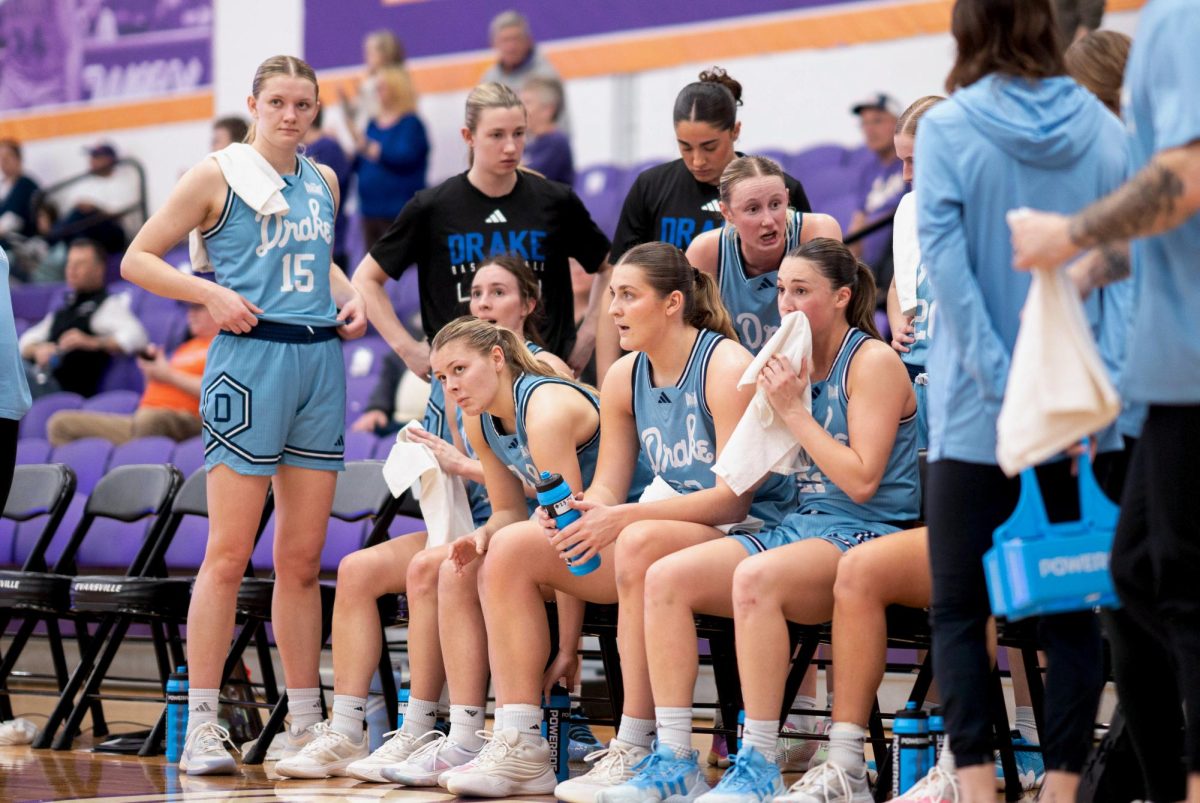
Hardin has also made coaching hires that have revitalized the Drake men’s and women’s basketball programs and the football program. In 2018, Hardin hired Darian DeVries to coach the men’s basketball team. In DeVries’s six-year tenure at Drake, he led the Bulldogs to three NCAA tournament appearances. When DeVries left for the Big 12 to coach West Virginia, Hardin hired Ben McCollum, who led Drake to the most wins in program history and the Round of 32 in the NCAA tournament for the first time since 1971. On the women’s side, Hardin hired Allison Pohlman as head coach in 2021. In her five seasons at the helm, she’s led Drake to two NCAA tournaments and four 20-win seasons.
Hardin also hired Todd Stepsis to coach the football team in 2018, and he led Drake to two Football Championship Subdivision playoff appearances. After Stepsis left, Hardin hired Joe Woodley, who led Drake to another FCS playoff appearance in 2025 during his one season with the Bulldogs.
Academics, athletics and social life
Throughout this success, Hardin aimed to keep the culture of hard work and all-around excellence that Drake promotes.
“There’s a lot of things that I’m really proud about,” Hardin said. “First and foremost, it’s the ability to show that a school at Drake can succeed athletically while not bending on anything that has made it great over time, which is attracting student athletes who want to be challenged academically, athletically and socially.”
Drake students are often motivated by academics and hard work, and student-athletes are no exception, said Hardin. Drake doesn’t have majors to “hide student athletes in,” he said, and they’ll be challenged in any program they enter. This allows coaches to recruit athletes who desire the academic challenge and want to grow in the classroom, too. Hardin noted that this reality may have led to some athletes going elsewhere, but it’s allowed Drake to maintain its culture.
“If you want to major in your sport, then you need to go somewhere else,” Hardin said. “There are plenty of schools where you can go, and you can major in football or soccer or basketball; that does not work at Drake.”
To build student athletes socially, Drake gets them involved in the local community. In Hardin’s first year, he started 515 Day, a day of service on May 15, where the athletics department does community service projects throughout central Iowa.
The athletics department also aims to take care of its players in various ways. The women’s basketball team hired a mental strengthening coach named Ethan Miller, according to sophomore guard Peyton McCabe. Players will meet one-on-one with Miller or as a team to discuss the mental side of the game, which can be taxing.
“It’s been a really awesome resource for us … to just make sure we’re in the best place mentally to compete,” McCabe said. “But also making us better people, providing us with the skills to go into the workforce, to go into our daily classes.”
Competing in modern college sports
College sports are still changing dramatically every year with the transfer portal and name, image and likeness deals, and Drake has had to adapt. In men’s basketball specifically, Drake has had three coaches in the last three seasons. But Hardin looks for coaches with competency and character who will continue building on the successful performance at Drake.
Last season, Drake hired Eric Henderson to coach men’s basketball, who said he’s motivated to build a strong team culture.
“You want to make sure that the players are playing for what’s on the front of the jersey and not on the back of the jersey,” Henderson said. “To do that, you have to have an understanding of the history of the program and respect what people have done before you.”
Drake has a long history of athletic success, including a men’s basketball NCAA Tournament Final Four appearance in 1969, eight total men’s NCAA Tournament appearances and 15 women’s NCAA Tournament appearances. Even though Henderson’s first season didn’t lead to a championship win, his goal is to get Drake basketball back to competing for conference championships every year.
“When we’re playing in front of our fans and people of Des Moines here at the Knapp Center, we have to be better, and that’s my job to make sure we get there,” Henderson said.
Henderson stressed the importance of retaining players to build team chemistry and culture, while still dipping into the transfer portal to supplement the roster.
NIL also plays a role in building a championship-caliber program. Drake men’s basketball legends Roman Penn and D.J. Wilkins had a burger named after them at Lucky Horse. Hardin also spends more time securing resources and revenue than he did before NIL, so that Drake can have winning programs.
“We have found a way to navigate through [NIL], and I’m confident that we’ll be able to continue to find a way,” Hardin said.
A recent example of success in revenue generation was in February of 2026, when Drake announced a $1 million gift for men’s basketball from alumni Bill and Linda Weidmaier. Half will go towards an endowment to support men’s basketball, and the other half will go towards a new mezzanine-level hospitality suite at the Knapp Center, another future form of revenue generation for the program.
While Drake has found ways to navigate the uncertainties and unpredictability of NIL and the transfer portal, Hardin said the program has to take a reactive approach to the changes in college sports.
Conferences like the Big Ten and SEC have more influence over the finances of college athletics, and mid-majors like Drake have to react to the changing landscape that high-major teams establish. Despite having to take a reactive approach, the athletics administration has been attentive to the changes in college athletics and has remained competitive in the NIL era. Director of Athletic Communications Dave Shindelar said that Drake Athletics’ senior administration has remained upfront and communicative through the changes to inform the staff how Drake plans to position itself in the changing landscape.
“If you’re taking collegiate athletics seriously at your university, then you’re taking NIL seriously now,” Shindelar said.
During these changes, Shindelar said that without question the student-athletes remain the department’s priority — a testament to the culture the school has built.
From the player’s perspective, McCabe said that NIL and the transfer portal can be “scary” and “daunting,” but she feels confident in Drake, and specifically the women’s basketball program.
“We’ve had the privilege on our team to have really loyal players stick around; we haven’t had many players leave at all to go be in the transfer portal,” McCabe said. “That’s something really unique and powerful about our program here.”
A small school
With approximately 4,200 students, undergraduate and graduate combined, athletes make personal relationships with professors, coaches and other students, creating a community on campus.
“What makes Drake special is how small and personal it is,” McCabe said. “Our coaches work with us as people, not just players, and that creates a team-first, hard-working culture across all sports.”
This small size can create threats for the future of programs, like the advent of the enrollment cliff impacting small, private universities. Due to low birth rates between 2007 and 2009, experts predict a 15% drop in college students from 2025 to 2029, according to The Hechinger Report. Drake has responded to the enrollment cliff with an enrollment of 829 associate, bachelor, and transfer students in the fall of 2025, a 12.5% uptick from 2024, according to a University news release. If Drake trends in this direction — sustained enrollment and athletic success — the small athletics community should continue to thrive.
“Drake isn’t just a winning program; it’s a place where coaches and teammates care about who you are off the court, too,” McCabe said. “That personal, small-school environment makes it really special.”