
“There are people like the Nazis everywhere. There are people in America who would stomp over the bodies of half the country if it meant they could control the other half.”
That’s what psychiatrist Dr. Douglas Kelley, played by Rami Malek, tells the hosts of a radio show interviewing him on his book, “22 Cells in Nuremberg.”
The hosts had commented on the grim picture his book paints. “22 Cells in Nuremberg” concludes that the Nazis were not any different from other humans. Rather, most of them were ordinary people — not psychopaths, not aliens — whose hatred was fueled to such a point that they could justify committing crimes against humanity.
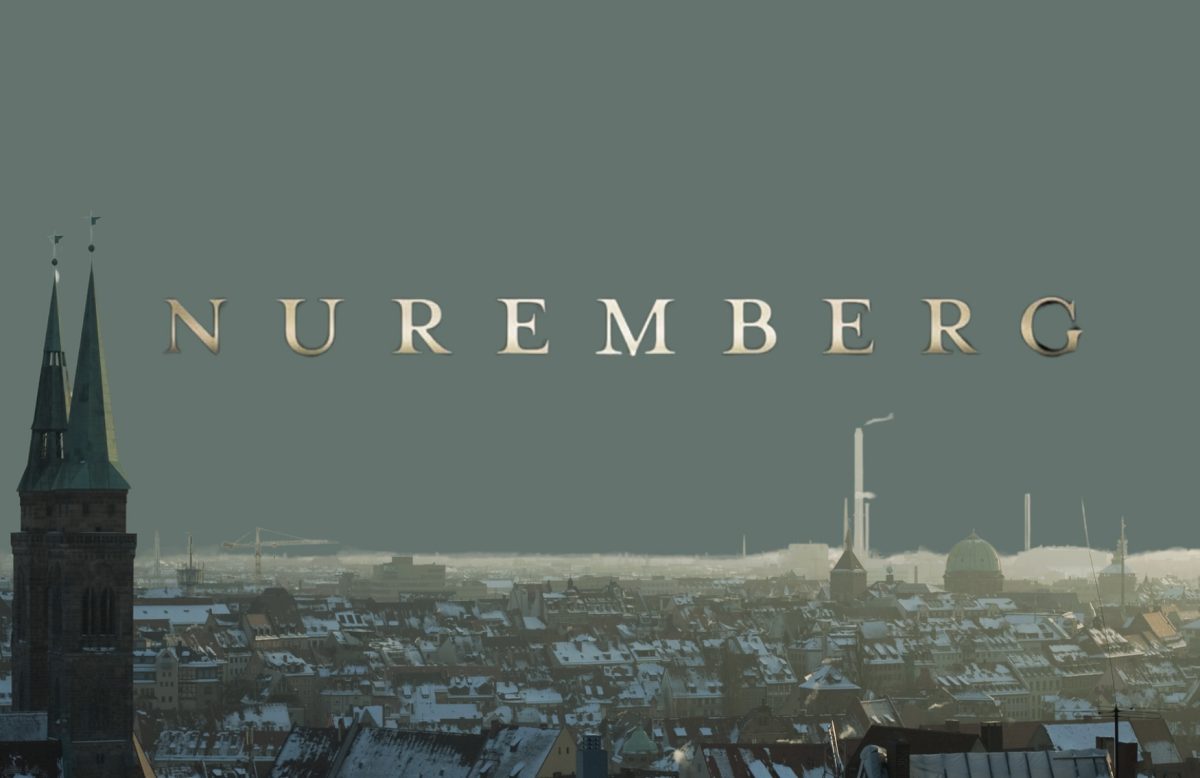
This interview is one of the very last scenes in James Vanderbilt’s 2025 film, “Nuremberg.” The film follows Kelley as he is assigned the monumental task of psychologically evaluating 22 Nazi leaders. I liked the film, but don’t go if you’re not ready for something heavy.
In a world becoming more overrun with authoritarianism by the day, the whole film felt all too familiar. American society has become a game of polarizing beliefs where extremism breeds violence.
Many modern cultural critics have begun drawing parallels between the Third Reich and our current political administration. I’ll leave out my own two cents on that line of thinking and instead direct you back to that first quote:
“There are people like the Nazis everywhere.”
That, I believe, is true. I also believe that complacency is the enemy of history. So no matter if it’s in Germany or America, the only way to prevent atrocity is to never grow complacent.
Kelley certainly isn’t complacent, if not slightly misguided. Towards the beginning of the movie, Sgt. Howie Triest, played by Leo Woodall, who acts as Kelley’s German translator, asks Kelley why he would want to write a book about his findings if not for notoriety.
Kelley claims he wants to “find out what makes them different … so we can make sure this never happens again.”
If only it were that simple. It’s a distinctly human urge to want to try and define a problem so that you might eradicate it. But as Kelley comes to find out, evil is not something diagnosable. It’s something that feeds off of the worst parts of people’s natures.
When it comes time for the trial, Justice Robert Jackson, played by Michael Shannon, presents footage of Nazi concentration camps. Mind you, it is authentic archival footage that was shown at the real Nuremberg trial. It was enough to make sour bile rise in my throat.
That footage, to me, is impossible to justify. And yet, it happened.
By that point, we had seen Kelley form a tentative friendship with Göring, helping pass letters between him and his family. Confined to the cells at Nuremberg, Göring becomes detached from his own actions. For both the film’s characters (i.e., Kelley) and the viewers, a potent disillusionment is formed between the atrocities that Göring signed off on and the knowledge that he is just as human as anyone else. That means that something as horrible as the Holocaust could happen again if we stay complacent.
At one point in the film, Triest remarks to Kelley that “this happened because people let it happen.”
And so I reiterate: Complacency is the enemy of history. Don’t sit idly by as half the country is stomped on. Don’t just let it happen.