
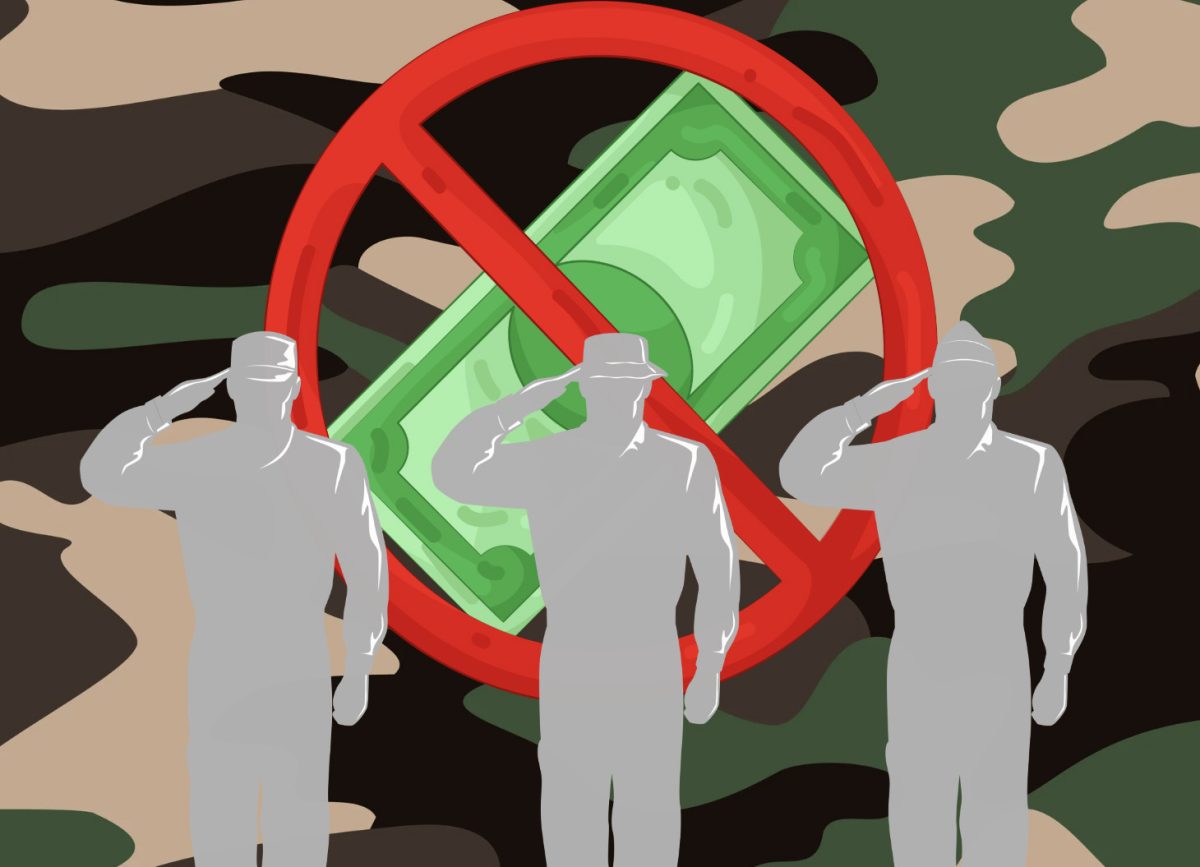
With the end of the longest government shutdown in history, there has been a sigh of relief among federal workers across the nation. The largest federal agency, the Department of Defense, and its workers are no different, with different demographics experiencing varying levels of impact.
Talks and concerns on how the government shutdown has affected the more than two million military members in the United States have led to talks and reflections among service members. For me, the shutdown was a time of insecurity and stress, as much of my Drake University funding is based on government budgets.
Roberto Fortin, a sophomore at Drake and active specialist in the Iowa Army National Guard, said that he has been directly impacted by the shutdown and it has taken a great toll on him as well.
The Strategic Political Communication major explained that the money gained from both drill weekends has been cut short, and benefits provided by the National Guard have since been paused. Moreover, he explained that with other necessary payments, such as his car, this money is essential.
“[The government shutdown] has affected my mental health because it brings so much concern on how to pay off these bills that are currently stacking … which brings more stress towards my mindset,” said Fortin.
While the uncertainty of not knowing how long the shutdown would last, Fortin said that Drake has not only been understanding of the situation, but also provided the temporary solution of pausing multiple debts on his financial account.
Being in the same shoes as Fortin, a service member attending university, I both agree and resonate with his feelings in regard to the shutdown.
The income from drill, like Fortin, is my main source of income, and since the first of October, my drill weekends have been canceled and my pay has also been short from the previous month. Furthermore, while I am on a different payment plan, which has not been as affected as Fortin currently, with upcoming Spring registration, I am not sure how financial aid will work depending on the continued effects of the shutdown.
I have yet to receive the monthly allowance given by the Montgomery GI bill to National Guard members attending college, and trying to get in contact with a Veterans Affairs representative for the state has become twice as difficult as before, seeing that they have been trying to compensate for the time missed.
Like Fortin, though, the financial aid office at Drake, specifically veterans affairs, has been a great source of help during and through the uncertainty of the shutdown. Even with not knowing much for themselves in regards to possible aid, I have been able to receive alternative options and the possibility of a paused account, like Fortin.
Fortin furthermore expressed the possible negative outlook on the government that might come due to their handling of the shutdown, relating specifically to servicemember pay.
“[I]t’s the idea that if [the government] is not paying the soldiers but [it is] overusing them … is going to give a negative view,” said Fortin.
I hope that the end of this shutdown continues to demonstrate the need for both a cooperative and communicative government in the future. For over a month, many service members felt the lack of morale due to party division — something I hope does not occur again.