Live music has been celebrated in all cultures across the globe. From the ancient Greeks strumming a lyre to the cathedral organs of the Renaissance, music has united people. And today, music is easier to listen to than ever. The advent of digital music streaming has made music more widely accessible for everybody.
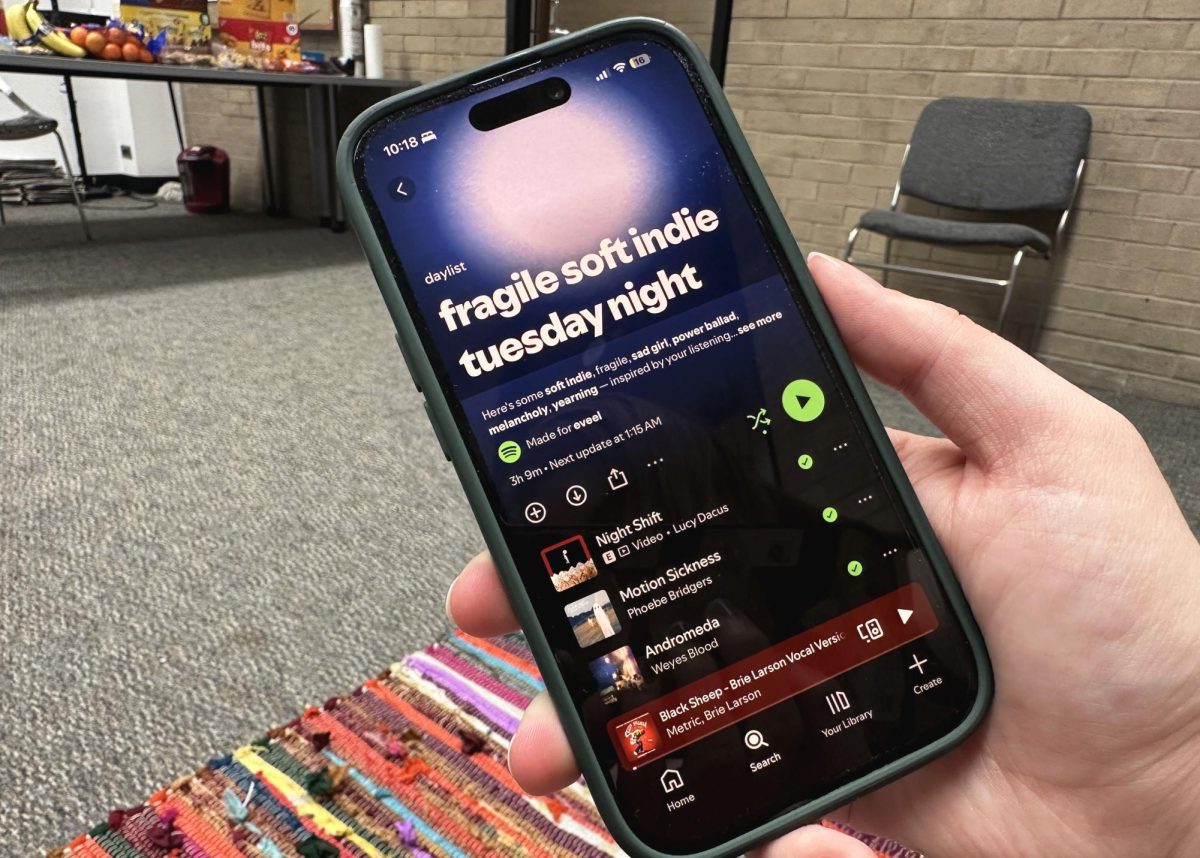
Using Spotify, one can search up whatever genre they crave. Spotify can curate playlists for a particular taste and only pick songs that its algorithm knows you will enjoy. These algorithms are undoubtedly powerful, but they can easily lead to a narrowing of music taste rather than a broadening.
Algorithms are made to boost user engagement. They are designed with the express purpose of keeping the user on the platform longer to drive more advertising revenue for the corporation in control. The best way to do this is to pick out inoffensive songs that are unlikely to drive you away.
Any song that may be polarizing is not chosen simply due to its potential of being disliked. A disliked song gets a user off the platform, thereby reducing ad revenue and user engagement. This behavior is good for attention, but bad for users. Polarizing songs are often someone’s favorite song and equally often someone’s least favorite.
No song can ever be truly universally liked. As algorithms drive music towards the middle, they decrease the exposure of truly amazing songs that have more soul. Good songs are not mediocre. Mediocre songs are good for profits.
As a user listens to more music, their algorithm becomes better at picking songs that are unlikely to turn that user away. Each listen feeds the algorithm data. When the algorithm picks mediocre songs that users listen to anyway, it learns that inoffensive songs keep the metrics right.
We can break the cycle by listening to new music outside of our comfort zone. Take a jump into the unknown and try metal, bluegrass indie or ska rock.
My personal awakening to non-traditional music was sitting beside a fire and listening to a small melodic metal band from Sweden. Later, I had a phase of chill instrumental songs followed by an artist who mashed up segments of other songs to create rhythmic masterpieces.
By intentionally diversifying your music taste, you’re telling your algorithm that change will keep you on the platform. You are saying novelty in music is worth it to you, even if the songs are not your favorite. This small change will reap rewards in the long term.
Even if you end up not liking any of the songs for any of the genres you try, your algorithm will still start recommending you new and novel songs in the genres you do like.
While new-age romance might not be your style, a small indie band that uses cello and piano in combination with guitars might be. You won’t know unless you try. What’s the worst that can happen?