
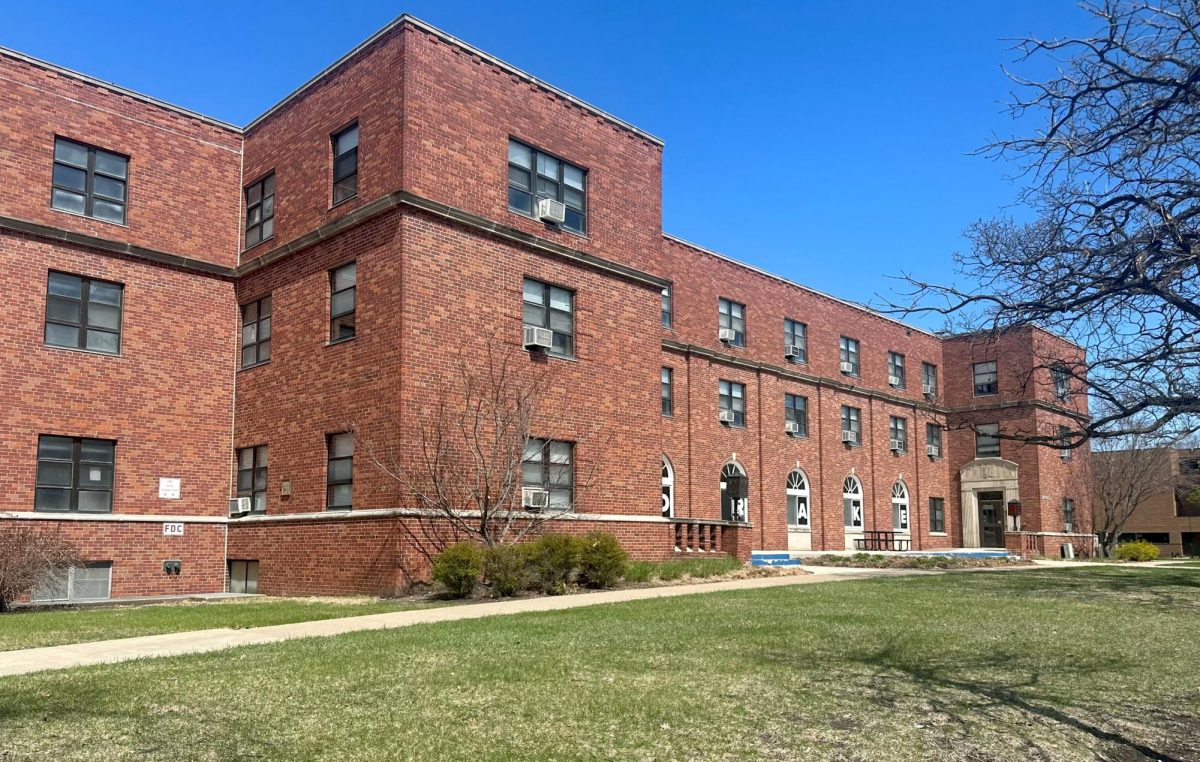
Jewett Residence Hall, once filled with students in the center of Drake University’s campus, has sat largely empty for the past three years after closing as student housing.
Olivia Long, now a senior and a former resident of Jewett, said the building “almost seems abandoned.”
“All of my friends [used] to live in Jewett,” Long said. “It was really easy to just go to each other’s rooms and hang out.”
For students who once lived there, the shift has changed not only where people live, but also how they connect. What was once a central social space has become noticeably quieter during the academic year.
University officials, however, say the building has not been left unused.
According to Betsy White, Drake’s director of conferences and events, Jewett now serves as temporary housing during breaks, summer conference space and short-term guest housing year-round.
The change allows the University to make use of the building beyond the traditional school calendar.
“We transitioned it for other uses, such as over winter break, over [January] Term and during the summer for conferencing and events,” said Scott Law, executive director of public safety and university operations.
While the building may appear quiet during the academic year, White said its busiest period runs from May through the start of the fall term, when conferences, camps and outside groups utilize the space.
Law said consolidating housing into fewer buildings during breaks has also created operational benefits.
“We now have [residents] in a single building,” Law said. “From a sense of safety, that’s a positive change that we’ve been able to create.”
White added that the transition has expanded the building’s service area and increased its overall use.
“We’ve gained a guestbook that reaches so many more individuals than just the Drake students living on campus,” said White. “If there’s a need for someone to stay nearby or on campus, we have a facility ready for them.”
Law said repurposing Jewett has allowed the University to support the Drake community in terms of temporary housing.
“We have some folks who are living in there who need short-term housing for any number of reasons,” Law said. “A new staff member who just moved into town… or an off-campus resident who might have had a problem with their housing. … In the past, we couldn’t do anything for them. Now we can help in those temporary short-term situations.”
But for students like Long, the change represents a loss of community that can’t be replaced by functionality.
“It was my home … and now it’s not a space for students at all,” said Long.