After years of middling in mediocrity, the St. Louis Cardinals finally began a rebuild this offseason. I previously covered this possibility of this rebuild for The Times-Delphic in October, saying that a rebuild, or what is traditionally the process of trading away veteran players for younger ones with high prospects, was the best course of action after three years of missing playoff baseball. And now that spring training is underway, it’s time to analyze St. Louis’ offseason and the four big trades it made.
Sonny Gray goes to the Boston Red Sox
The Cardinals’ first move was trading veteran pitcher Sonny Gray to the Boston Red Sox on Nov. 25. The past two years, Gray has been an anchor in an otherwise volatile rotation. In two seasons, he started 60 games, had a 27-17 win-loss record and posted a 4.07 earned run average. His consistency will be missed in St. Louis.
This trade, however, marked the beginning of a trend for the Cardinals’ front office: it’s willing to trade money to maximize returns. The Cardinals sent $20 million to the Red Sox along with Gray to net pitcher Richard Fitts, who could slot into the Cardinals’ 2026 rotation, and Brandon Clarke, a 22-year-old high-upside lefty pitcher. Eating $20 million isn’t always appealing for an organization, but it allowed St. Louis to acquire a stronger package.
Willson Contreras also goes to the Red Sox
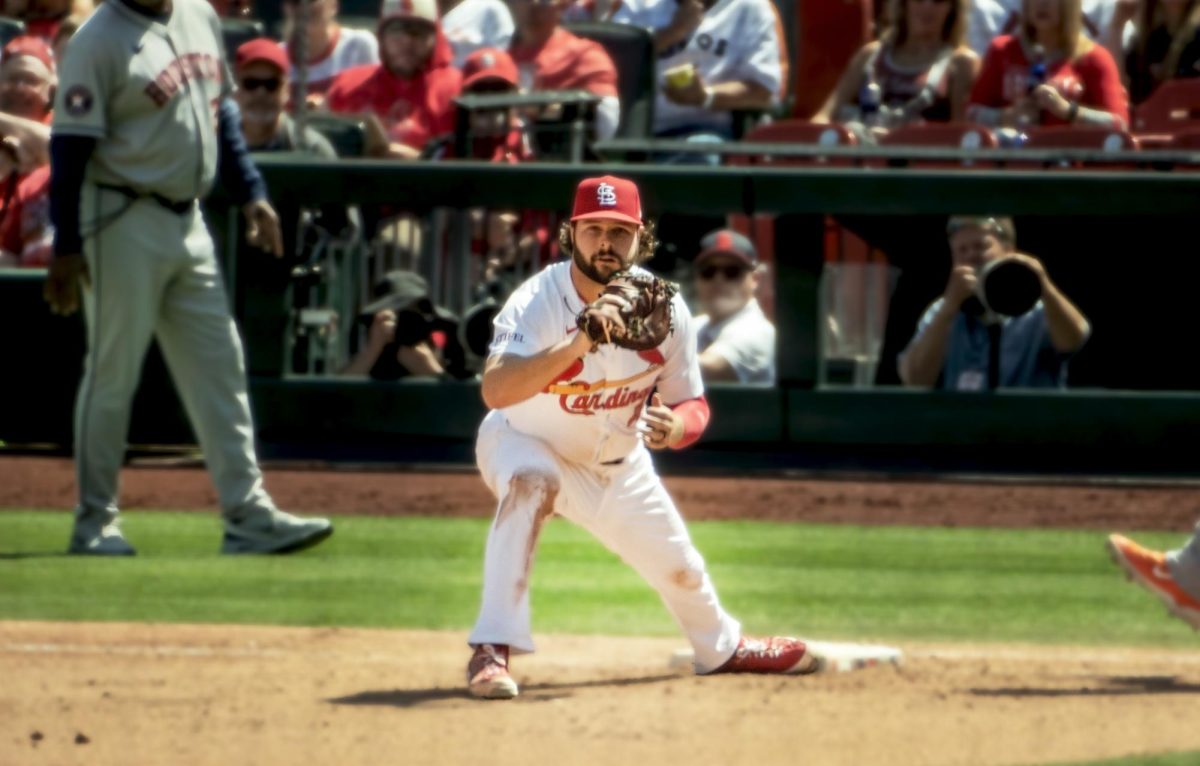
On Dec. 22, the Cardinals struck another deal with Boston, sending them 33-year-old first baseman Willson Contreras. Brought in after the 2022 season to replace future Hall of Famer Yadier Molina, Contreras spent two years as a catcher for the Cardinals before moving to first base.
Despite the position changes, Contreras remained a productive hitter in St. Louis. In his three seasons, he had an .817 on-base plus slugging percentage and an OPS+ of 127, meaning he was 27% above league average. He also hit roughly 18 home runs per season.
Contreras’s offensive prowess made him a valuable trade piece, and St. Louis sweetened the deal by sending $8 million to Boston. In return, the Cardinals acquired Hunter Dobbins, a major-league-ready starter, Yhoiker Fajardo, another high upside 19-year-old pitching prospect, and minor league arm Blake Aita.
Again, the Cardinals included cash to maximize returns, helping the Cardinals rebuild their minor league system.
Nolan Arenado heads to the desert
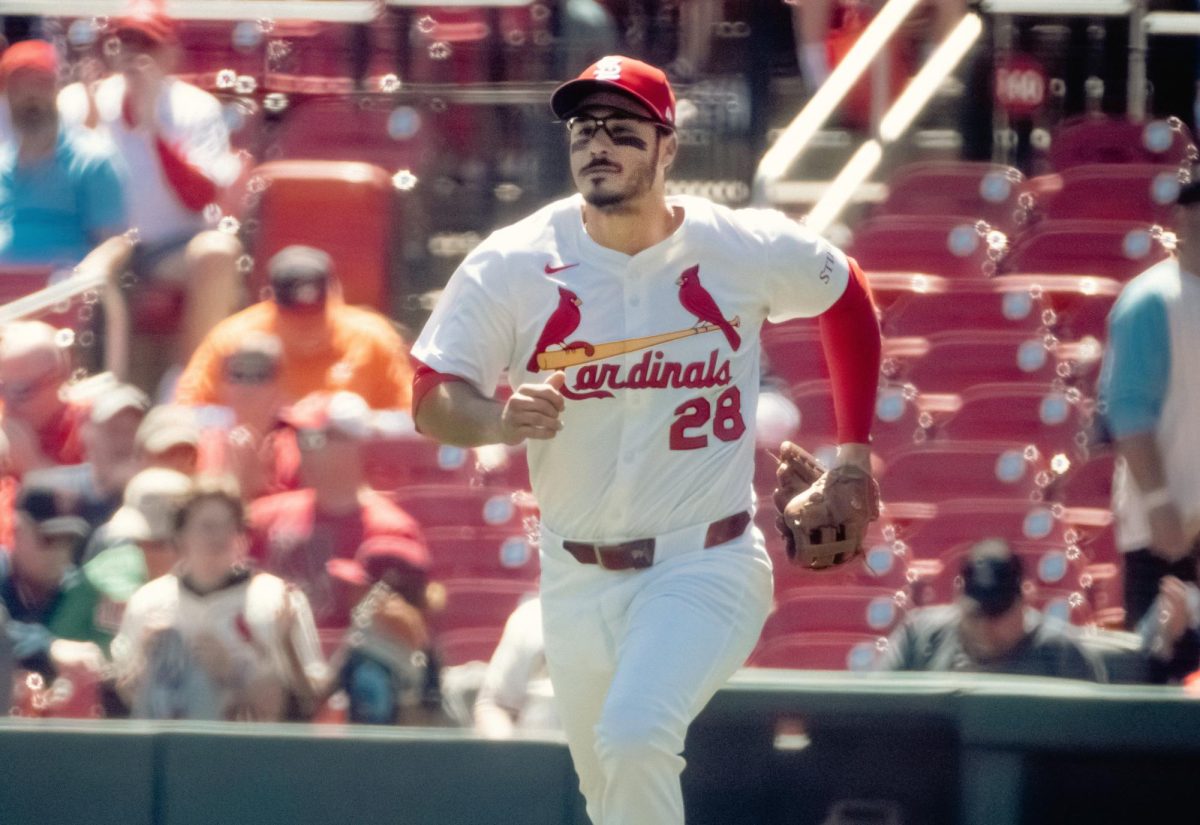
Nearly a month after the Contreras trade, St. Louis sent eight-time All-Star Nolan Arenado to the Arizona Diamondbacks. Arenado, 34 years old and in decline, was challenging to trade. He carried $42 million in salary and held a full no-trade clause, diminishing the Cardinals’ leverage.
The Cardinals sent $31 million, along with Arenado, in return for pitching prospect Jack Martinez. For many Cardinals fans, this was underwhelming. Martinez was drafted in the eighth round of the MLB draft last year and hasn’t pitched in pro baseball. And last year at Arizona State University, he had a 5.94 ERA in 15 starts.
It was a disappointing ending to the Arenado saga in St. Louis, but it clears the way for young players like former top-100 prospect Nolan Gorman. It also means that No. 5 prospect in MLB, according to MLB Pipeline, JJ Wetherholt will get playing time in 2026.
Brendan Donovan moves to Seattle
All offseason, there was chatter about a Brendan Donovan trade. A career-long Cardinal and 2025 All-Star, Donovan had become a fan favorite in St. Louis. But the 29-year-old becomes a free agent in two years, so the rebuilding Cardinals shopped him. The asking price was high, and the Mariners finally bit.
On Feb. 22, news broke that Donovan was going to Seattle. With a lower salary of $5.8 million, the Cardinals didn’t have to send any money and still received a haul. The headliner for St. Louis was pitcher Jurrangelo Cijntje, a top-100 prospect according to MLB Pipeline.
Cijntje is fascinating because he was drafted by Seattle as a switch pitcher, meaning he throws with his right and left arm. Seattle was going to have him focus on just his dominant right arm this year, but either way, he’s an intriguing prospect and a test for St. Louis’ player development system.
The Cardinals also received outfielder Tai Peete, who slots in at No. 15 on St. Louis’ top 30 prospect rankings, outfielder Colton Ledbetter, who came from Tampa Bay (it was a three-team deal), and two competitive-balance Round B picks.
A rebuild hasn’t happened for the Cardinals this century, and it’s jarring to see this organization tear down its major league team to restock the farm system. But it was necessary, and there’s hope coming.
Earlier in February, Baseball America ranked the Cardinals’ farm system as No. 2 in baseball, the highest it’s been in 13 years. And even as fans wait for those prospects to make the big leagues, exciting, young players like Masyn Winn, Alec Burleson and Ivan Herrera are still with the team, and likely to keep improving. After this offseason, there’s a future to dream on in St. Louis.