

Between academic programs and student-led advocacy, Drake University maintains a reputation as a politically active campus. Students can major in law, politics and society, join political student organizations like the Drake Democrats and the Drake College Republicans or write for the School of Journalism and Mass Communication’s own magazine, Drake Political Review.
Around six in 10 U.S. adults become stressed discussing politics with people they disagree with, according to a poll taken by the Pew Research Center. Lee Warren is a first-year student studying law, politics and society. While Warren emphasized the importance of finding a community that aligns with one’s beliefs, ultimately, Warren said it is equally essential to engage with peers who have opposing opinions.
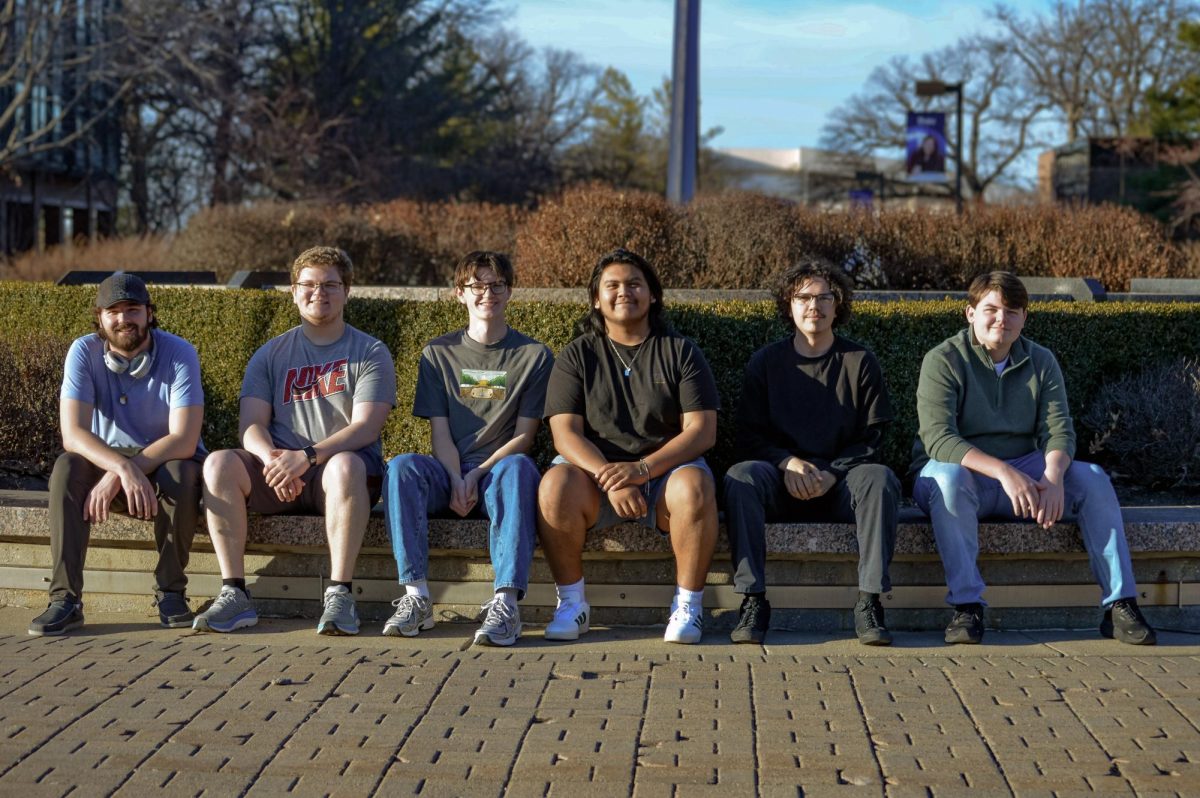
On Feb. 9, Warren founded a club to amplify all voices on Drake’s campus. The club, Students for Solidarity, aims to be a space for open discussion across all ideologies. It promotes the idea that, no matter political affiliation, ideals or beliefs, Students for Solidarity will be an accepting and welcoming place for productive conversation.
“People are very much a school,” Warren said. “If you sit there and attend, you will learn from them. …You need to have some accountability for how you’re thinking and your actions, and that is going to help campus thrive.”
From volunteer activities to roundtable discussions, the club functions as a community for students to meet others with different backgrounds and gain insight into other ways of thinking. Students for Solidarity strives to be a bridge between all political organizations on Drake’s campus, Warren said.
Kaden Shatswell, a first-year actuarial science major and newly appointed outreach chair, said he feels Students for Solidarity has successfully shaped such a community.
Shatswell has a speech impediment and said that, as a result, he doesn’t like to speak up when he has something to add. Students for Solidarity have changed that.
“The club is more than just like politics and stuff like that,” Shatswell said. “If you have a disability, … Like for me, I don’t really talk that much, but this probably would be like a good way to talk. I get my voice out there.”
Today, Students for Solidarity has nine members and is growing. One member, and recently appointed vice president, Jose Castillo, has helped Warren since the club’s early beginnings. Having lived in Des Moines for a major part of his life, Castillo has insight into what he feels is the lack of inter-political conversation in the community.
“I want there to be a community that’s able to be diverse and be able to stay together,” Castillo said. “I think we just need a space, especially during these times … to come together and to talk these out and have a dialogue with one another.
Their mission thus far has been successful, but it hasn’t come without some bumps in the road. The club has not yet received status to become a temporary registered student organization. This means Students for Solidarity can’t table at any campus events, so their ability to publicize is limited. Warren is hopeful, however, as the club can apply for TRSO status in the fall.
Despite registration drawbacks, the club maintains an Instagram account, @students.4.solidarity, to promote its mission.
“We are here to be educated,” Lee said. “Put yourself not only in your schools of thought … and allow yourself to be educated by others.”


