
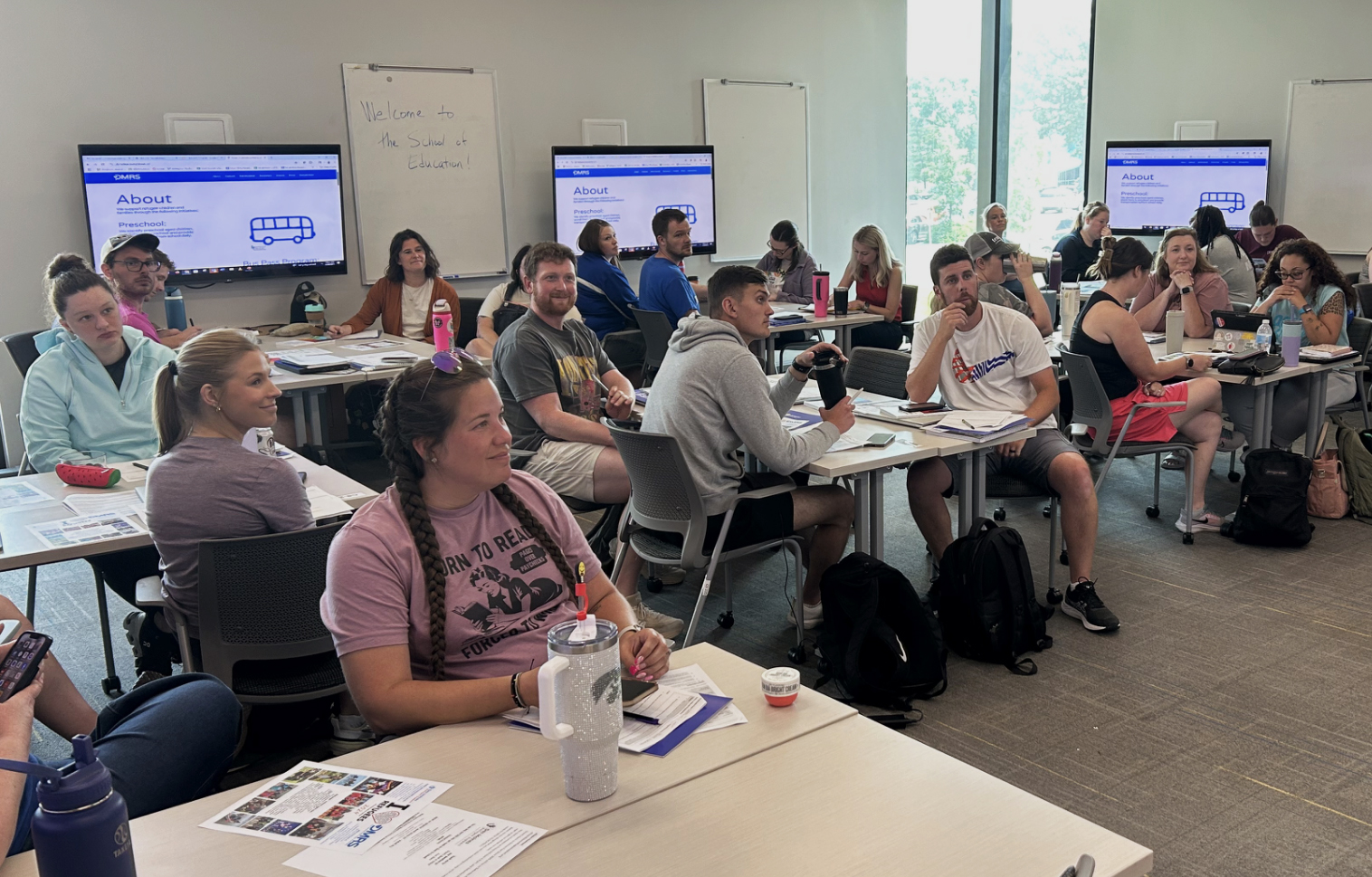

Drake University announced a new Bachelor of Science in disability and rehabilitation services within the School of Education at the end of last year.
This major was created to reflect the shortage of specialists nationwide and in Iowa trained to provide services to individuals with disabilities. It equips students with the skills to assist both individuals with disabilities and assist others in understanding disabilities.
The National Rehabilitation Institute at Drake, which created the new major, has an advisory board of representatives from state and community-based agencies that identify the needs and challenges for disabled individuals.
According to the director of the NRI at Drake, Matt Bruinekool, the advisory board informed and assisted the institute “in identifying the need for the new degree program.” Bruinekool said there’s also a need for disability-specific training.
“Typically, [graduates] might have a degree in psychology or sociology,” Bruinekool said. “They have general concepts, but not specific training around disability, about the kinds of work that we do in the field. Having a degree that specializes in the needs of the disability community is really important.”
The major has a grant from the federal Rehabilitation Services Administration, which provides scholarship funds of up to $10,000.
“It’s not your full tuition, but it can help [with] support. We’re really trying to make [this major] accessible with the scholarship funds,” Bruinekool said.
The major will focus on five core areas: advocacy, employment, disability, business and working with people.
Advocacy
The core area of advocacy will focus on the support of both visible and hidden disability inclusion. According to the World Health Organization, there are estimated to be 1.3 billion individuals with disabilities worldwide. In its report on disability, the WHO says individuals with disabilities experience “ableism, stigma and discrimination in all facets of life,” including in laws and policies.
Bruinekool said that workplaces may use a charity model of disability that asks for the inclusion of individuals with disabilities. Organizations would hire what Bruinekool called a “token” disabled person. He says trying to move away from the charity mindset and understanding the value of hiring people with disabilities is critical.
“The industry is fighting its own history, as well as the prejudice and the lack of understanding that exists within the greater community about disability,” Bruinekool said.
Employment
According to a Iowans with Disabilities report through the State Data Center of Iowa, 52.3% of disabled Iowans ages 18-64 were employed in 2022. In 2016, Iowa was ranked the third-best state in the nation for employing individuals with disabilities.
“We’re typically in the top 10 states in the country, so that tells you how many people [with disabilities] are unemployed or underemployed [elsewhere],” Bruinekool said. “Employment is just a core piece of what, in my opinion, any program that’s focusing on disability needs to do.”
Another part of the employment area is working with businesses.
“Educating them about the benefits of working with people with disabilities, about how to provide job accommodations and how to conduct job analyses on how to make worksites accessible,” Bruinekool said.
Disability
The major’s disability core area will focus on giving students a fundamental understanding of the basics of various disabilities that exist.
“They’ll also learn how to learn about disabilities,” Bruinekool said. “[They] need to understand the disability. [They] need to work with the individual to understand how it impacts their life, their quality of life and their ability to obtain and maintain employment to actively engage in the community so that [they] can provide the resources and support.”
Talia Prozument is a School of Education student and is one of the first students enrolled in this major. She will be focusing on the core area of disability. Prozument has an acquired disability that she wasn’t born with.
“I have seen firsthand the way in which society treats people who don’t present disabled versus people who do, and it makes me angry,” Prozument said. “There are people that lack the understanding and the empathy and the knowledge that they should have in order to interact with all types of people.”
Prozument believes this major will be “super helpful” and hopes to incorporate this major’s curriculum into her post-graduation education endeavors.
“I’m super passionate about educating everyone on how to be the most empathetic version of themselves,” Prozument said. “There’s not enough education about minorities in general, and I’m a part of that minority myself. [I’ll be] able to best support my students, clients [and] whatever in the future.”
Business
Bruinekool said business is a core area of the major because it deals with two clients — individuals with disabilities and the businesses in their communities.
The core area comes from research done at Drake in the 1990s, creating what’s called a demand-side job development model. While other approaches fit the individual to an existing job, this model trains consultants to help businesses address their “talent-acquisition and retention challenges.”
“This consultative approach requires students to understand business operations and workplace culture, communicate effectively with employers and identify solutions that address organizational needs,” Bruinekool said.
When combined with the other core elements of this new major, Buinekool says the skills students learn will create “sustainable employment opportunities that benefit both the individuals they serve and the businesses that hire them.”
Working with people
In the working with people core area, students are trained to become consultants for disabled individuals, service providers, employers and policymakers.
“Rehabilitation professionals must have an understanding of human behavior, family and community dynamics, and the lived experiences of individuals with disabilities,” Bruinekool said. “They must develop active listening skills to genuinely hear their clients and apply counseling techniques to support their clients.”
According to Bruinekool, this area within the major requires students to study psychology, counseling, family systems and disability studies. Those skills allow students to “build trusting relationships, navigate complex stakeholder needs and effectively advocate for the individuals they serve.”
For more information about this major, visit the website drake.edu/rehabilitation/.